HERD : rat-ATAT-touille The influences of Nostalgia and Western Pop Culture in the Work of Adriean Koleric / ITEM by: Luis Salazar
In the advancing assumption that the products of art are readily accessible, collectible, reproducible, and monocultural, audiences are becoming comfortable with an art language echoing the standards of mass media and mass production. As a standpoint for criticism this assumption postulates ideas of decimation and ambiguity as it relates to the quantity and quality of art being produced. More significantly, it leaves to speculation the necessity of the final product. Those artists captured by the lure of the mass produced consumable no longer seek to engage culture through complicated dialogues concerning personal nor cultural metaphysical significance. In such cultures the dominant force is not the capacity to mass produce and decimate material goods but rather the ability to decimate ideologies that favor the functions of the market place. Such ideologies are strongest when they replace individual scrutiny with the power of icons and symbols: surrogates to any personal dialogue between the viewer and his environment by purporting mass accepted solution sets to the queries of the culture at large.
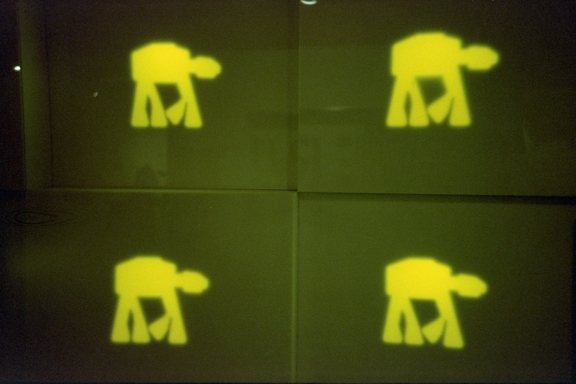
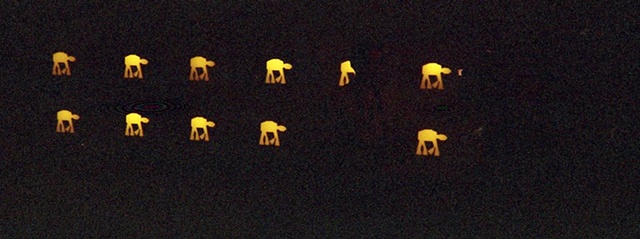
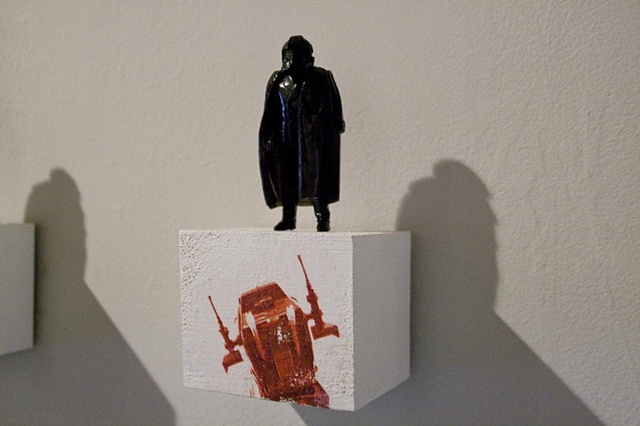
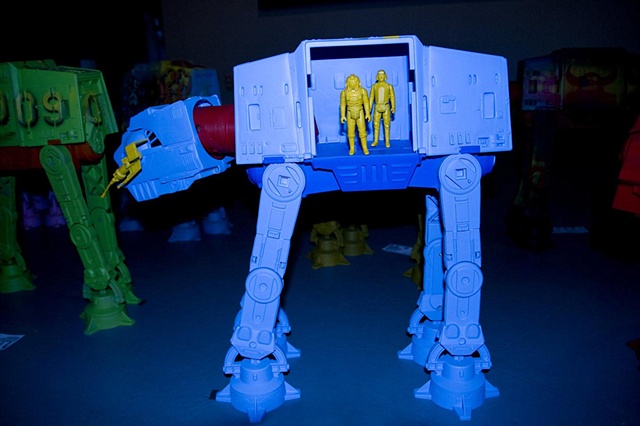
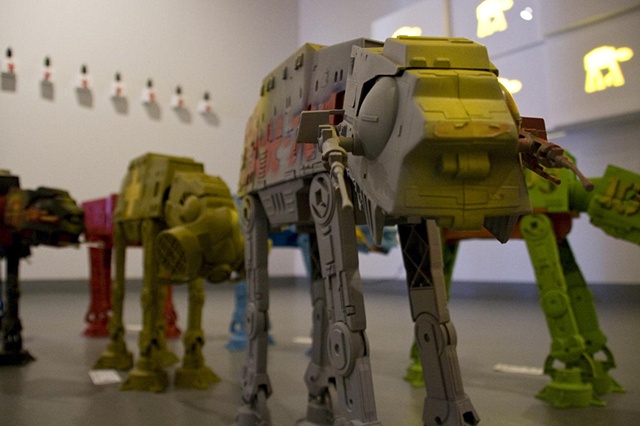
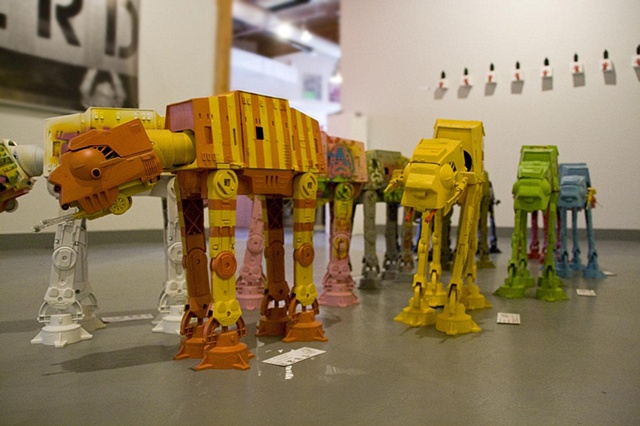
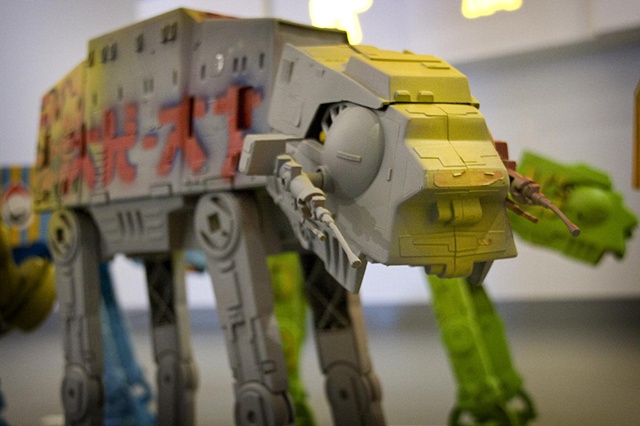
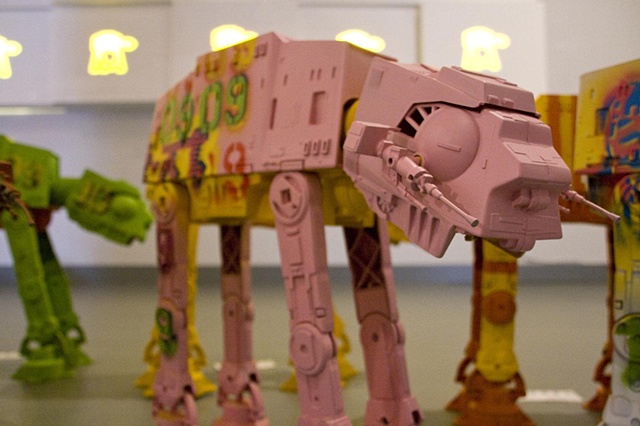
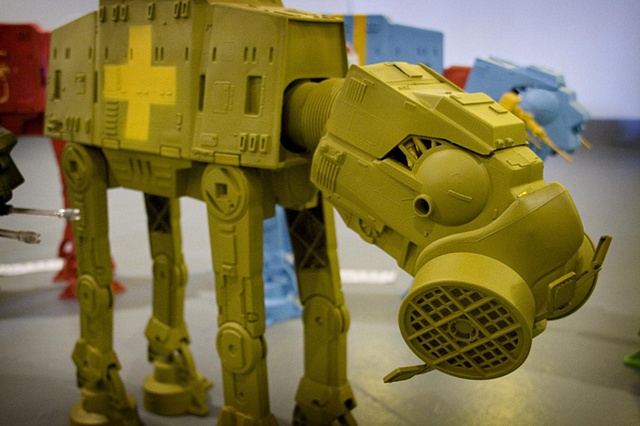
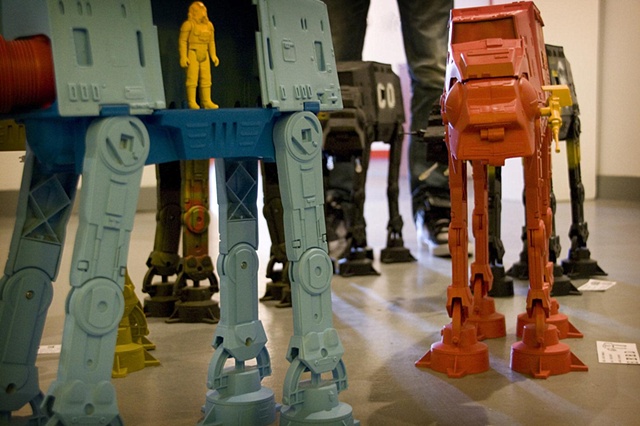
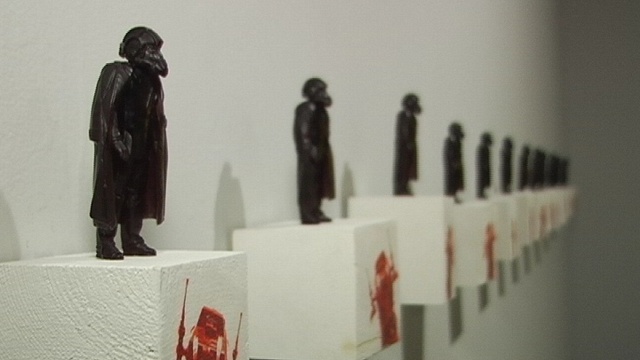
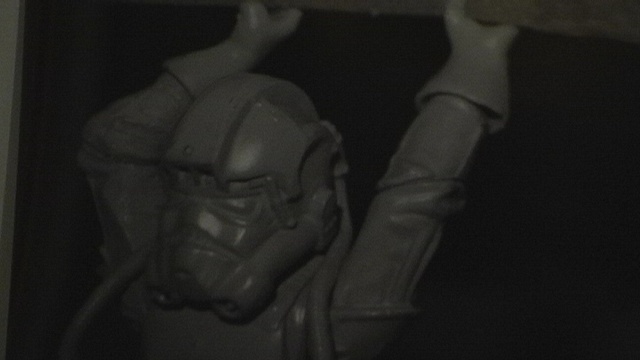
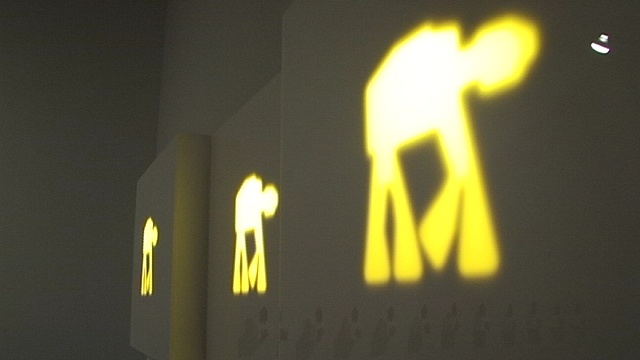
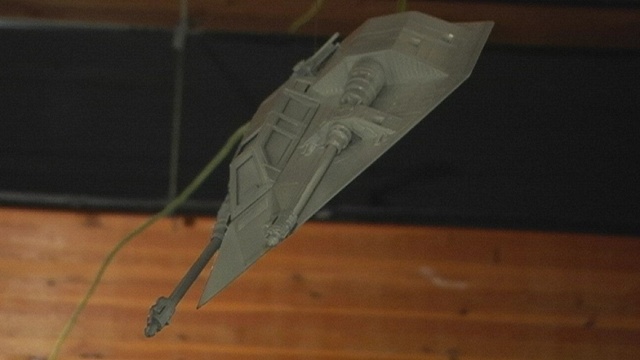
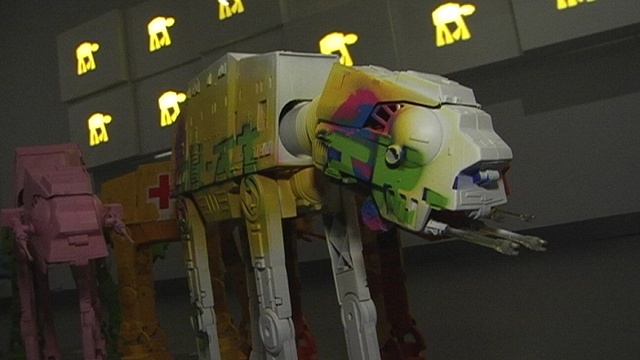
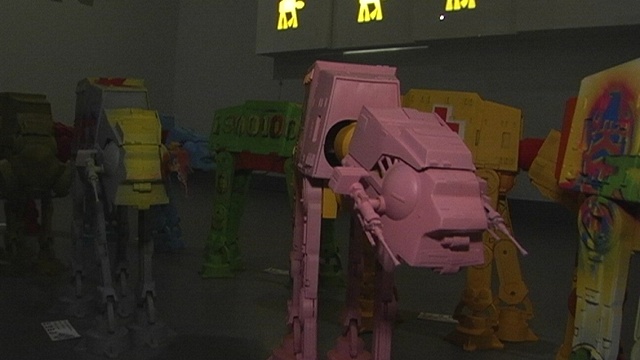
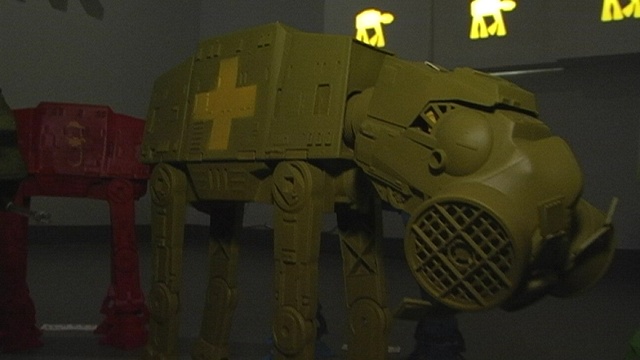
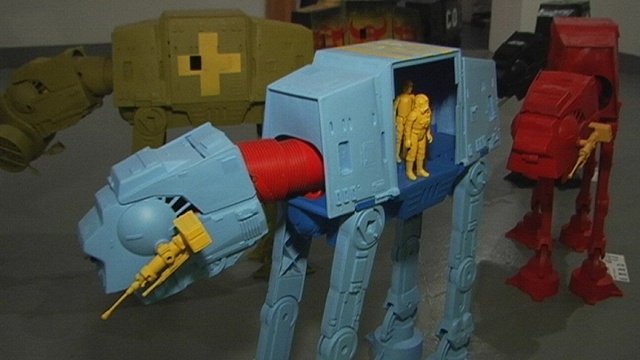
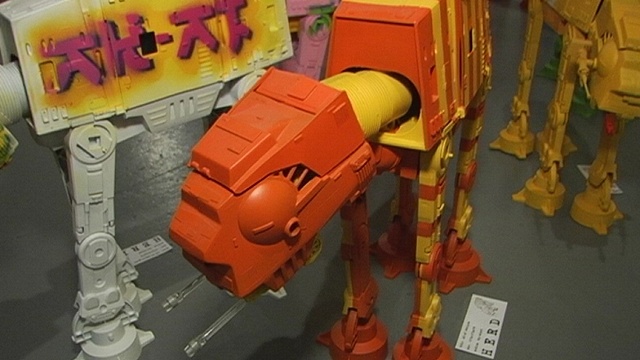
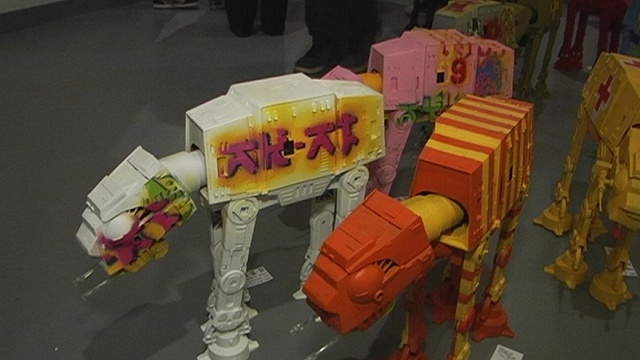
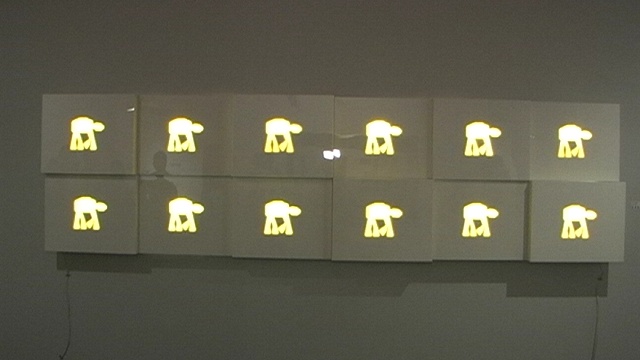
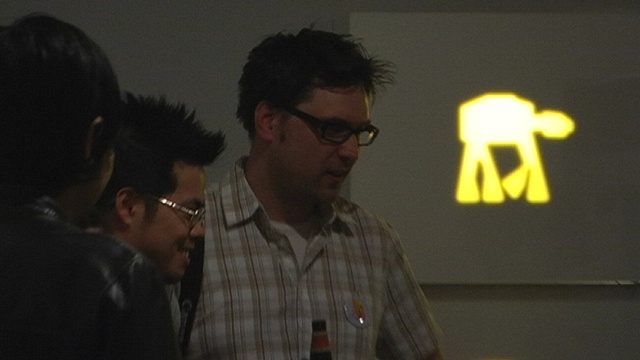
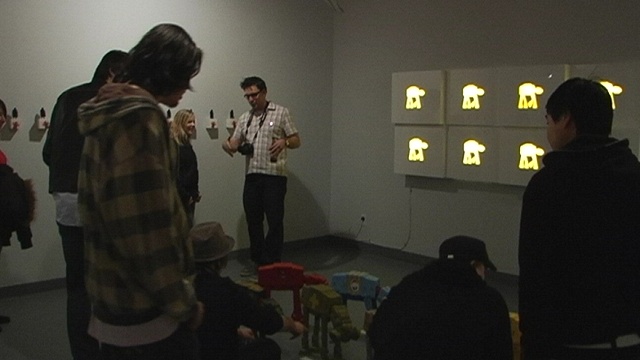
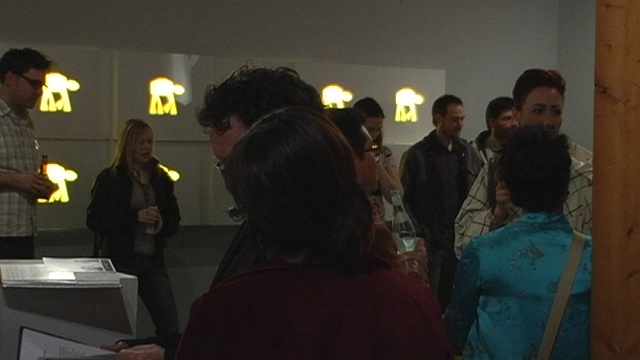
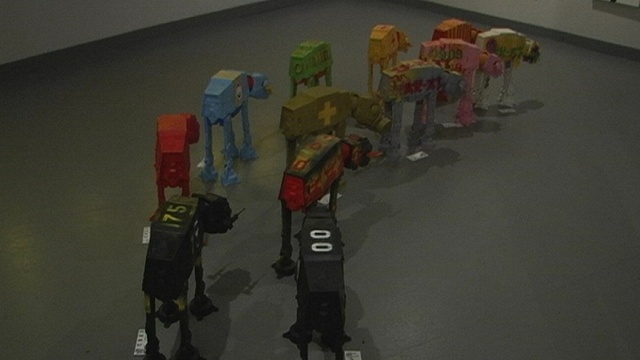
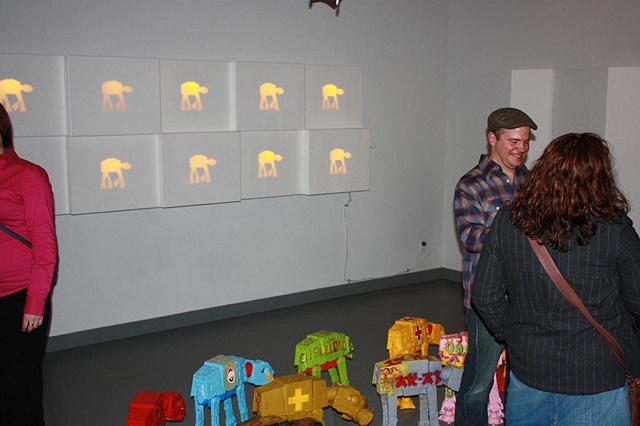
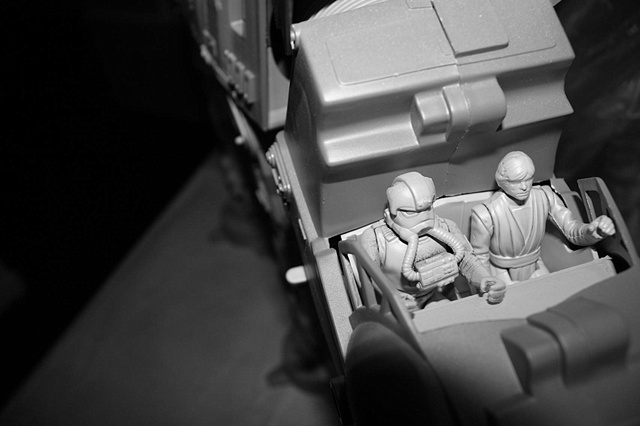
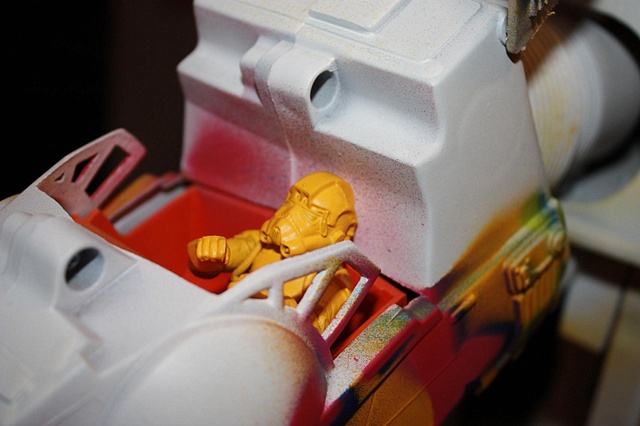
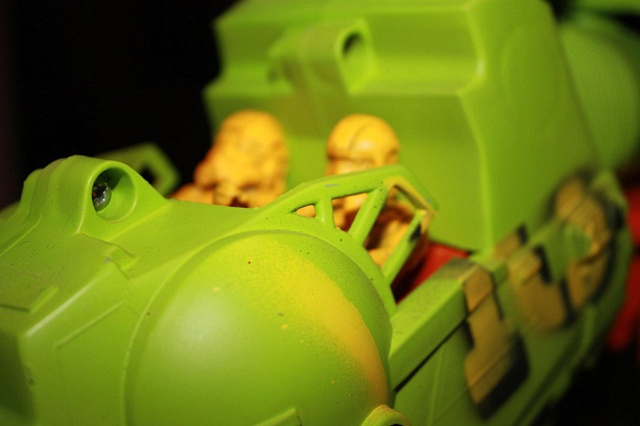
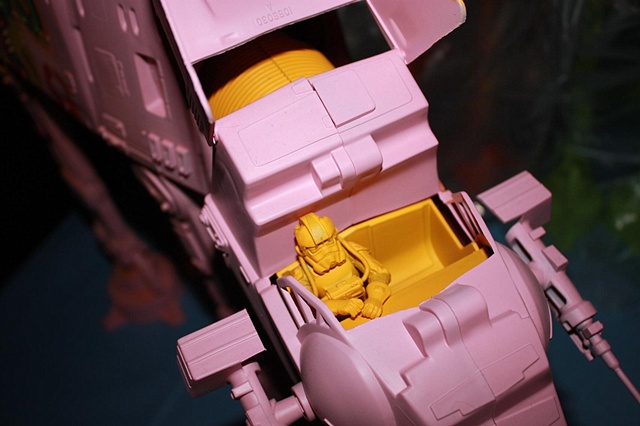
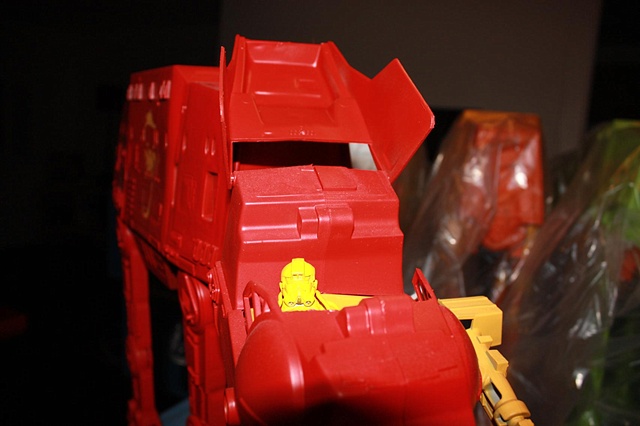
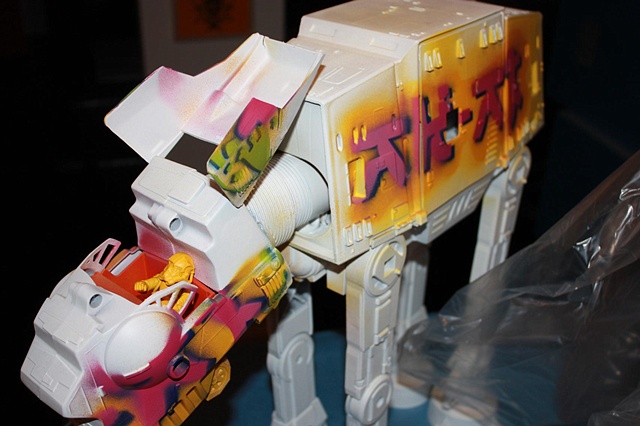
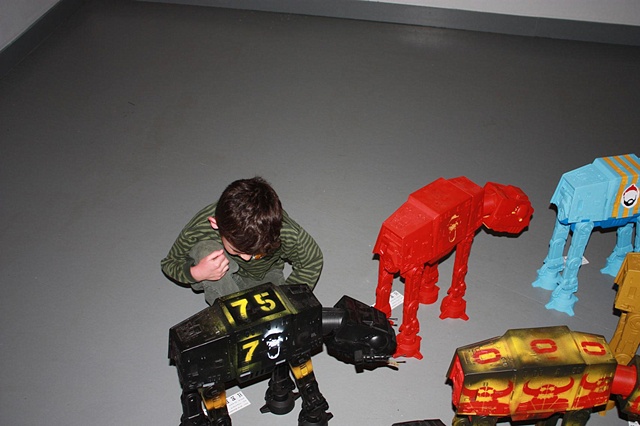
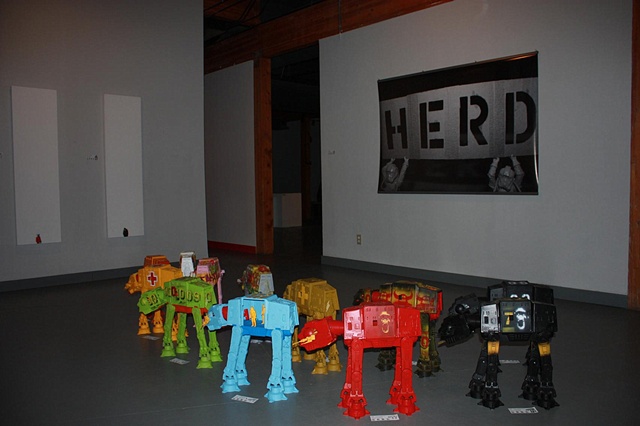
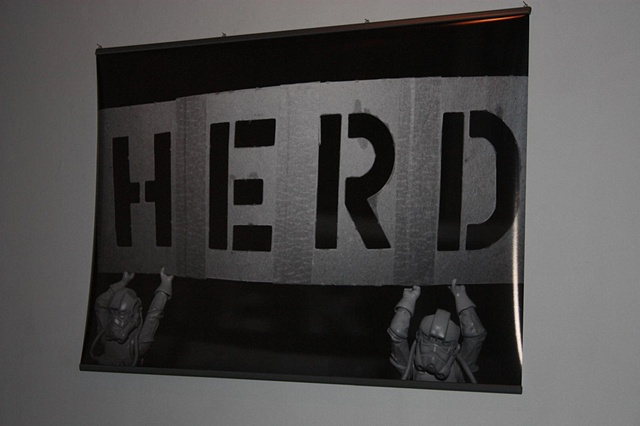
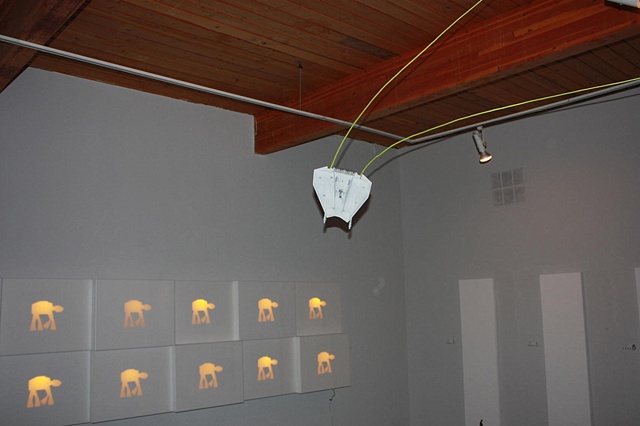
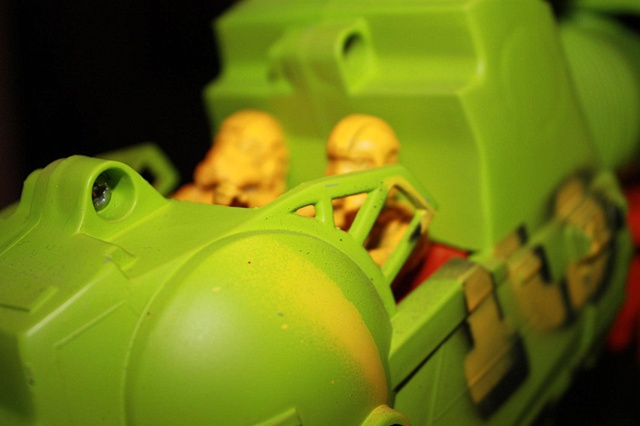
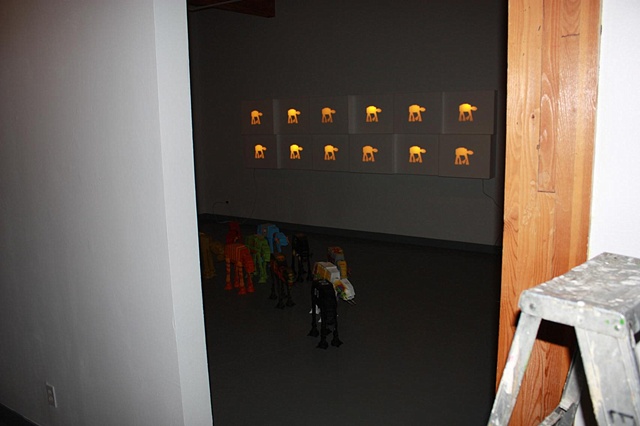
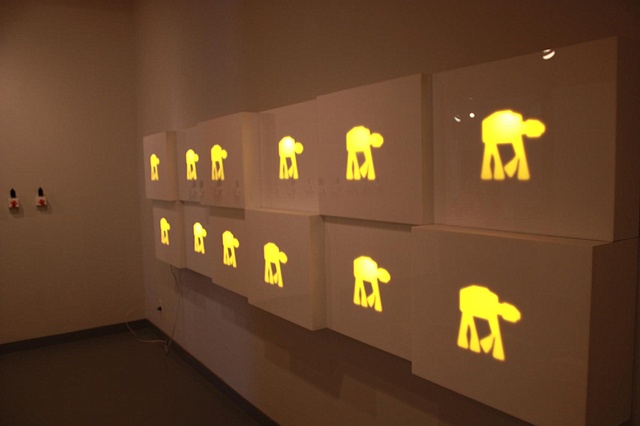
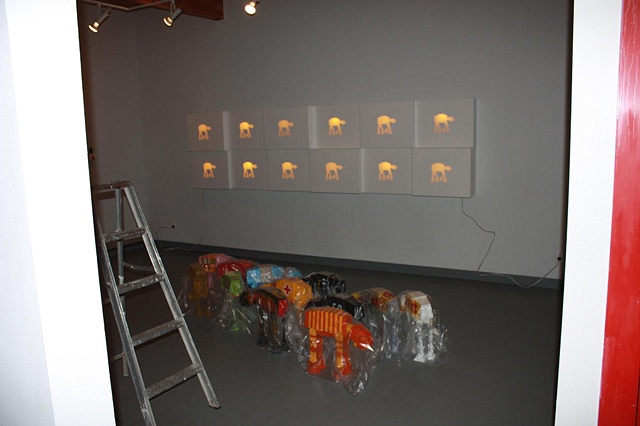
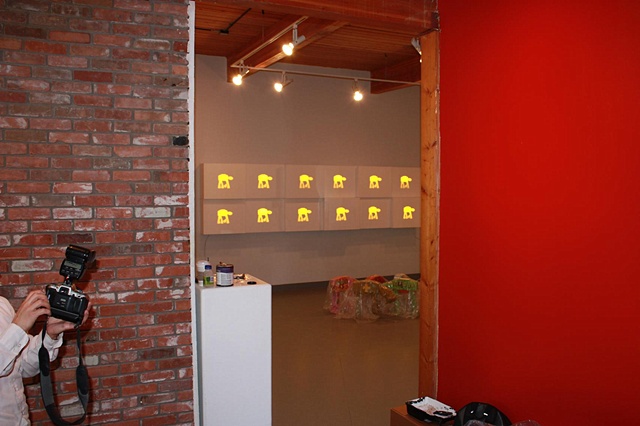
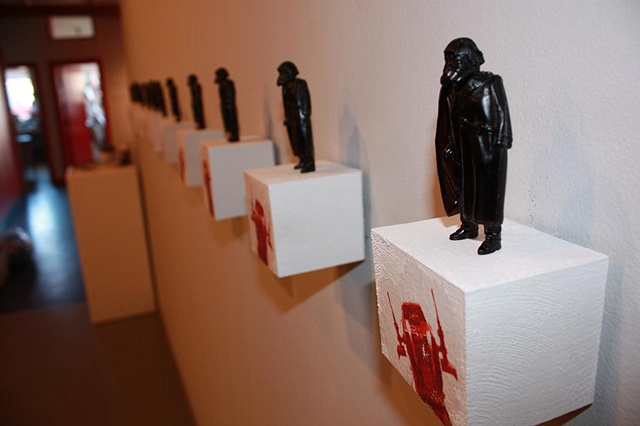
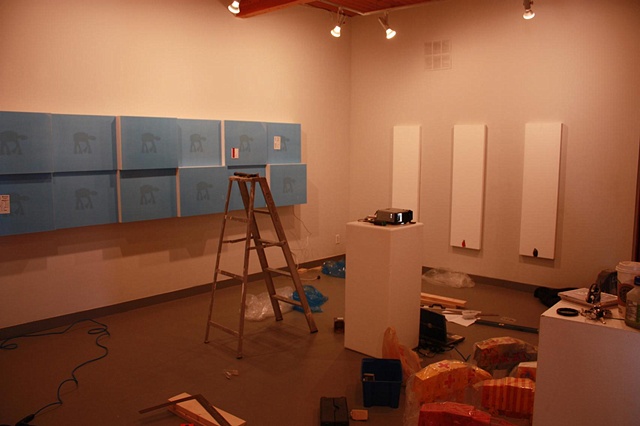
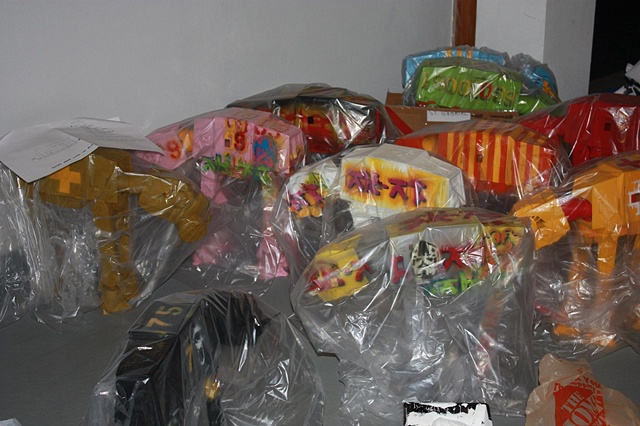
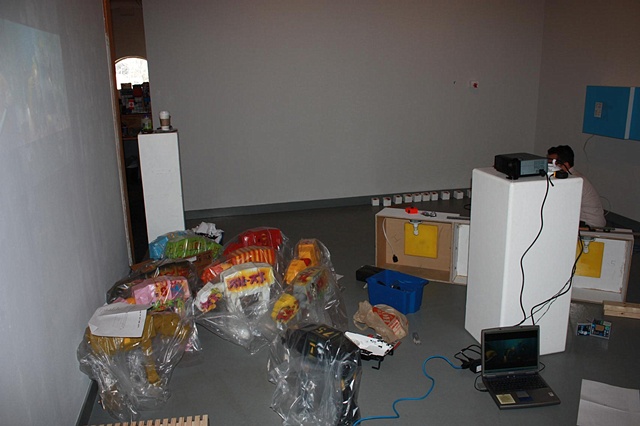
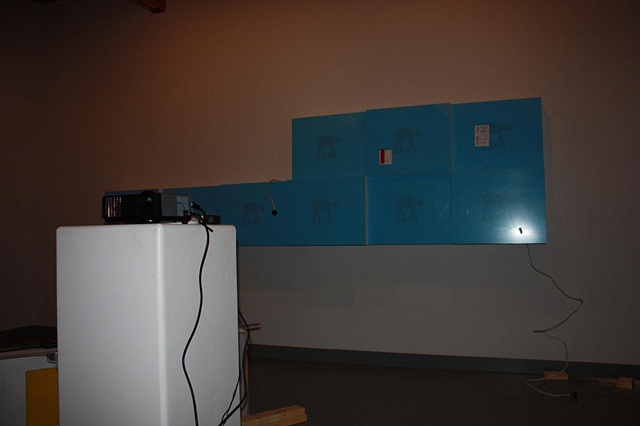
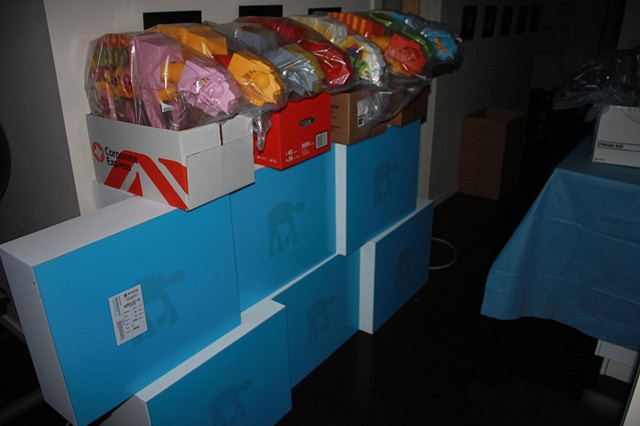
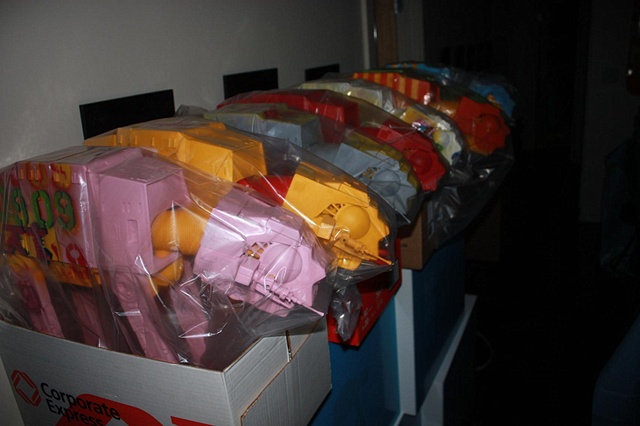
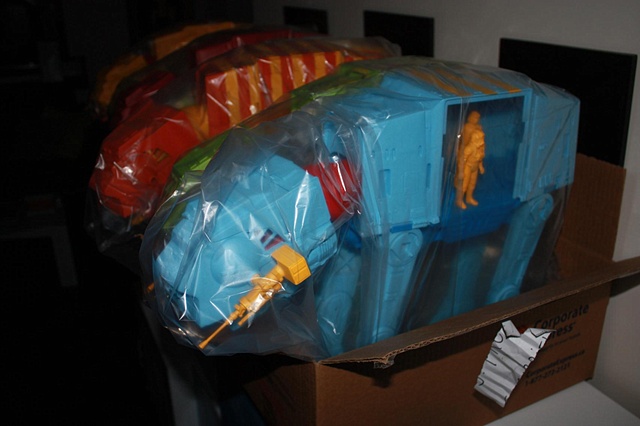
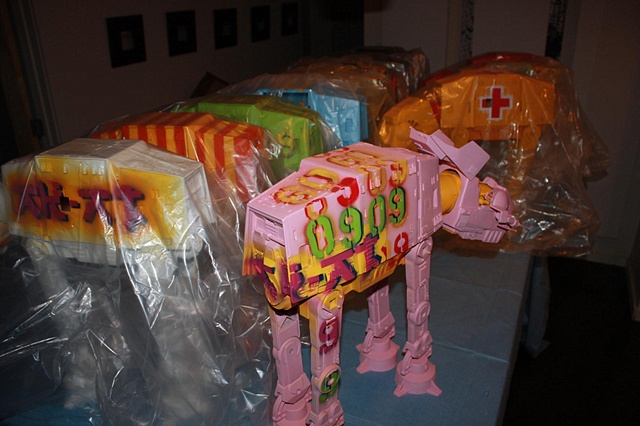
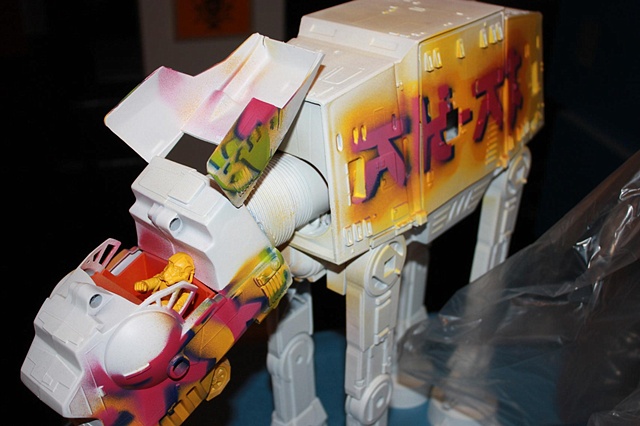
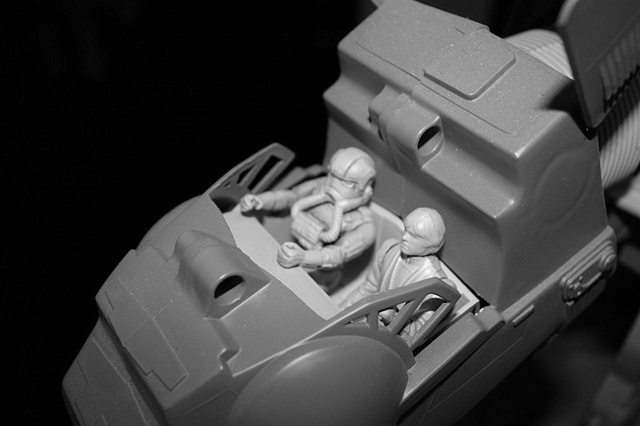
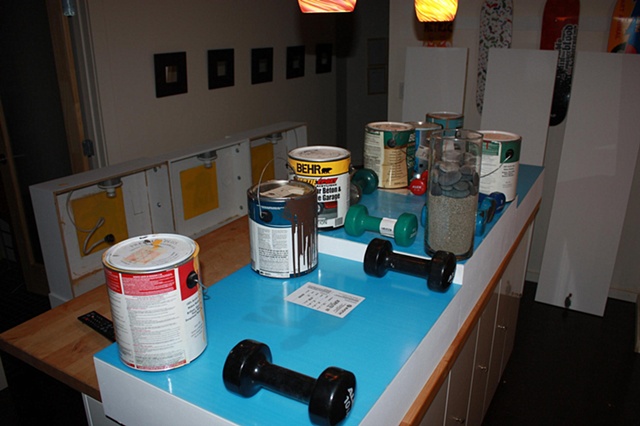
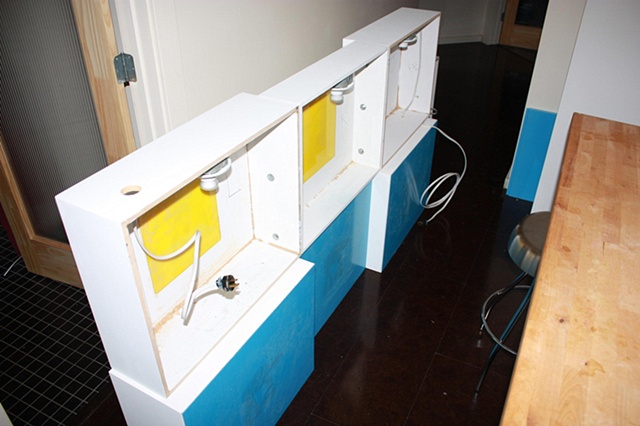
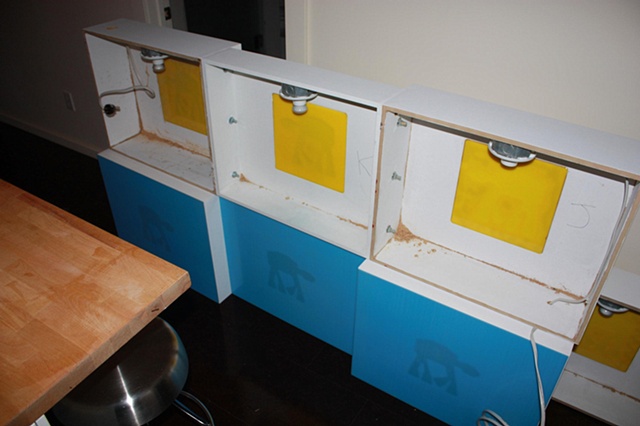
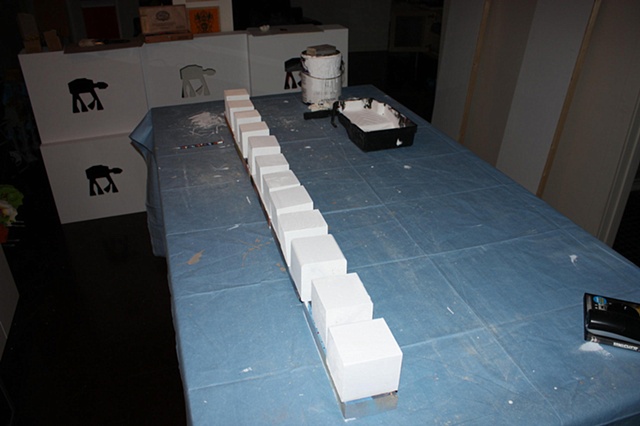
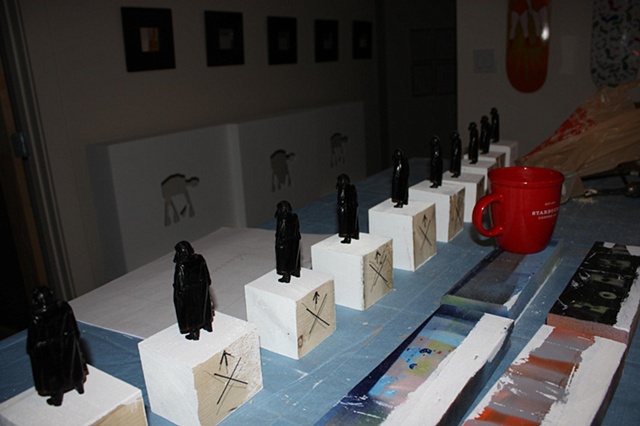
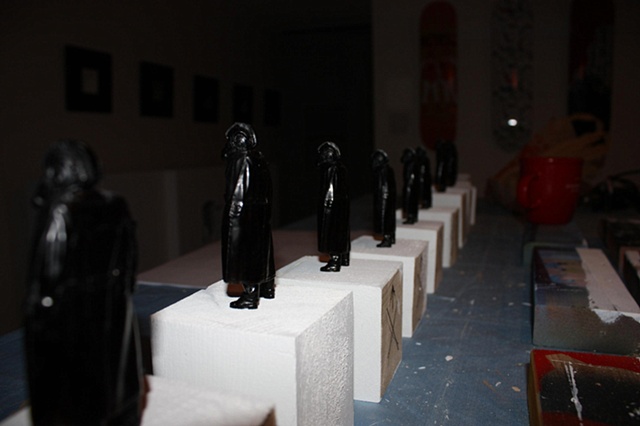
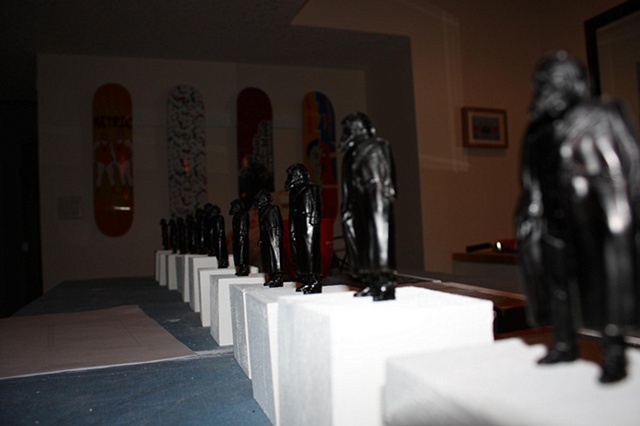
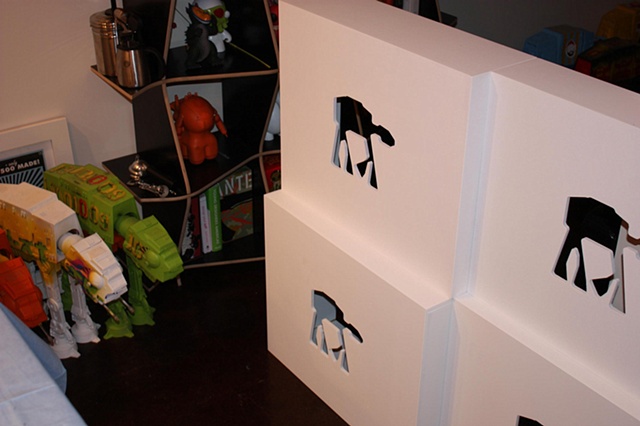
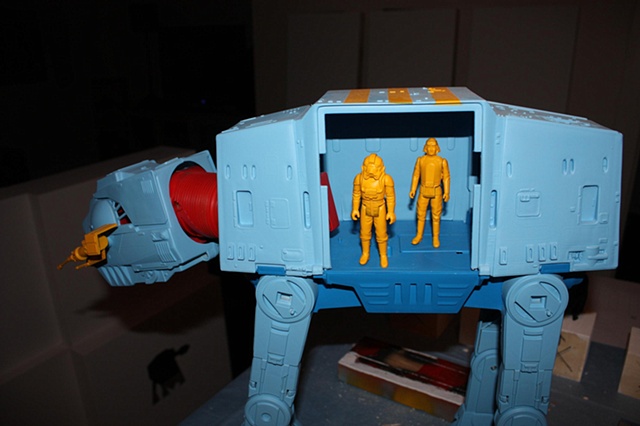
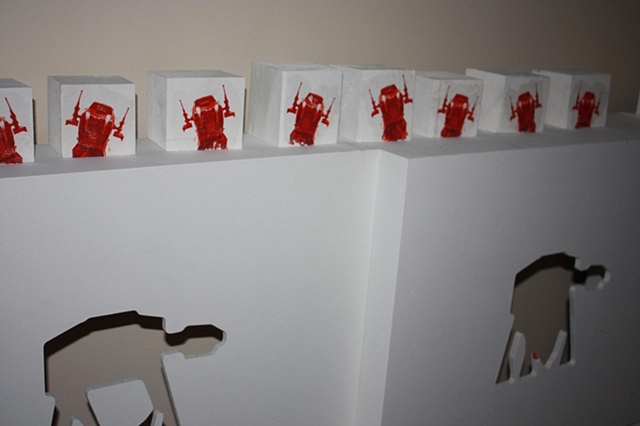
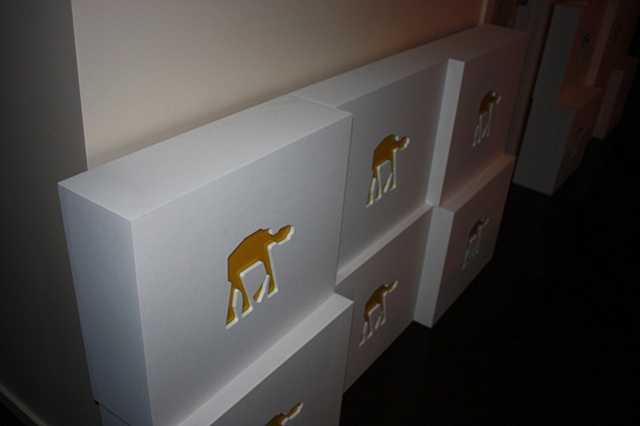
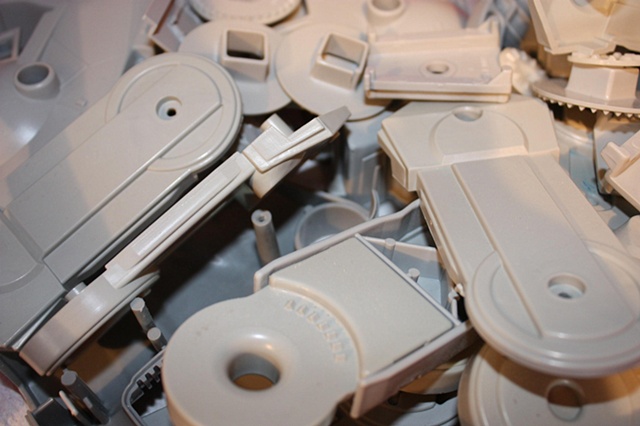
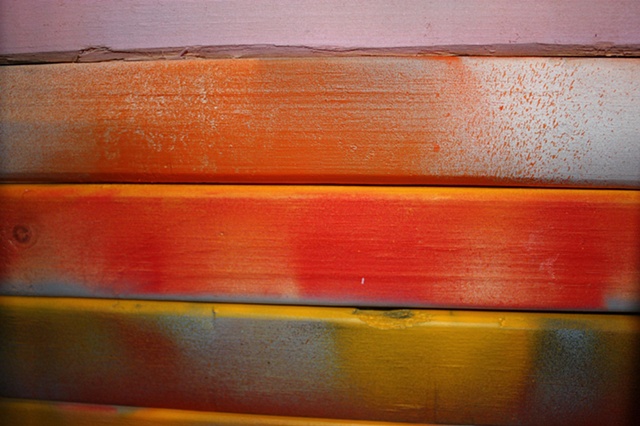
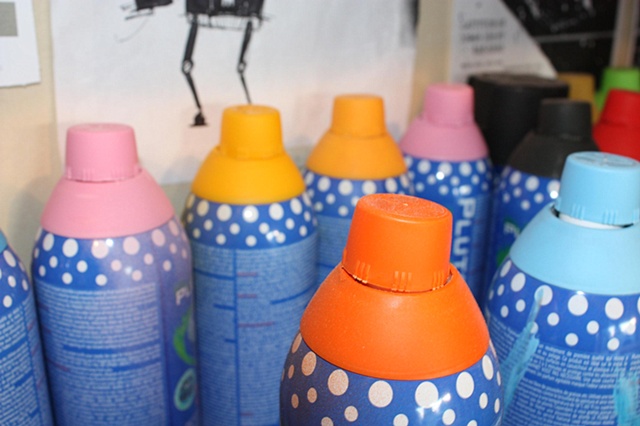
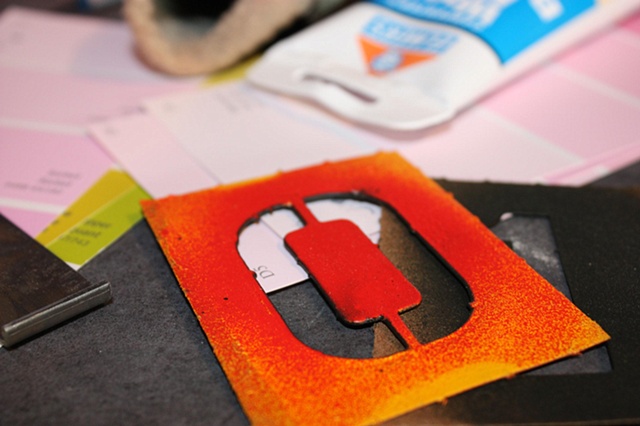
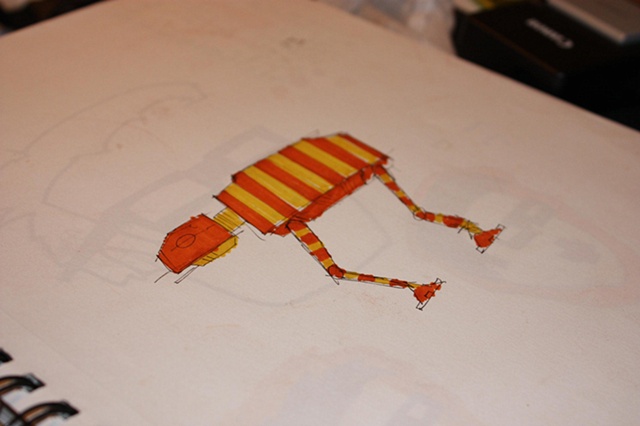
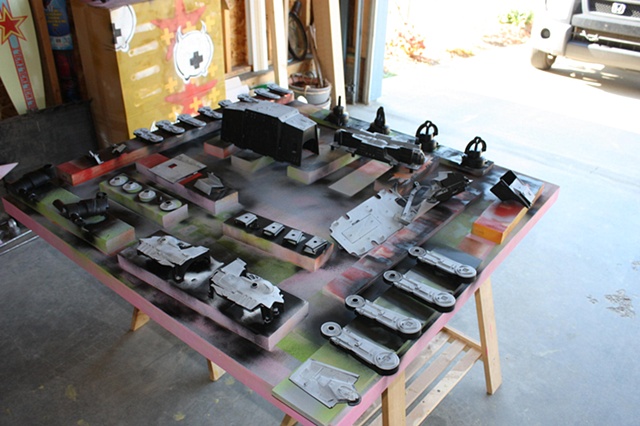
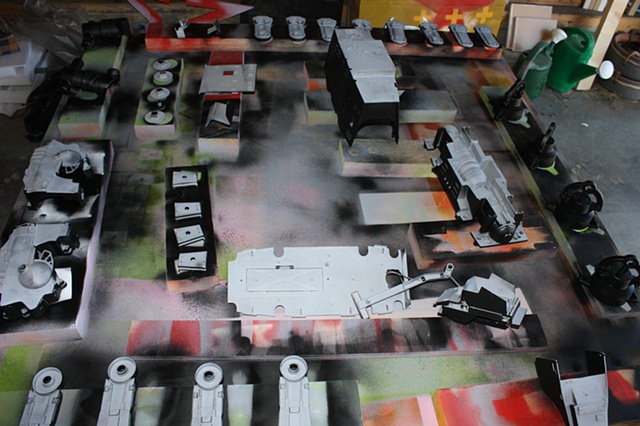
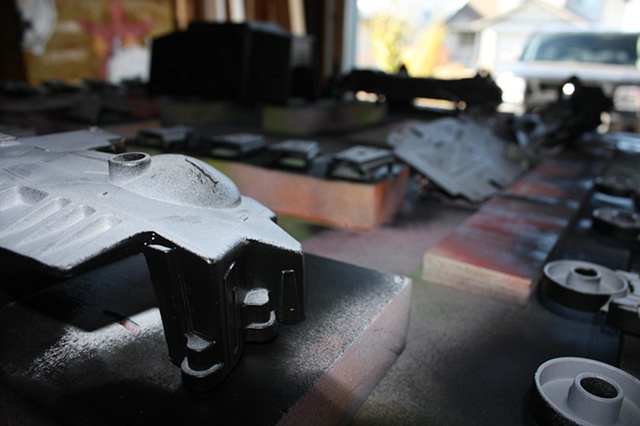
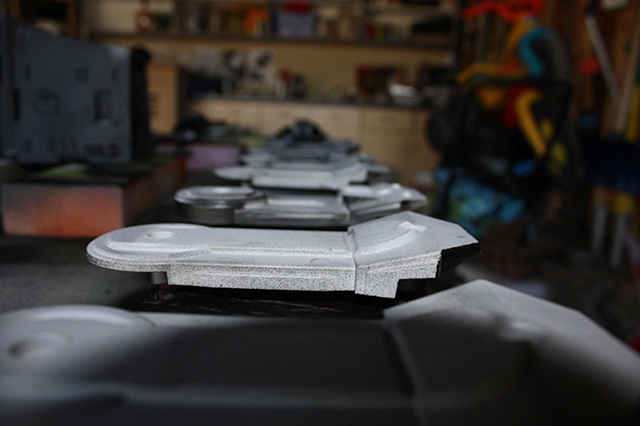
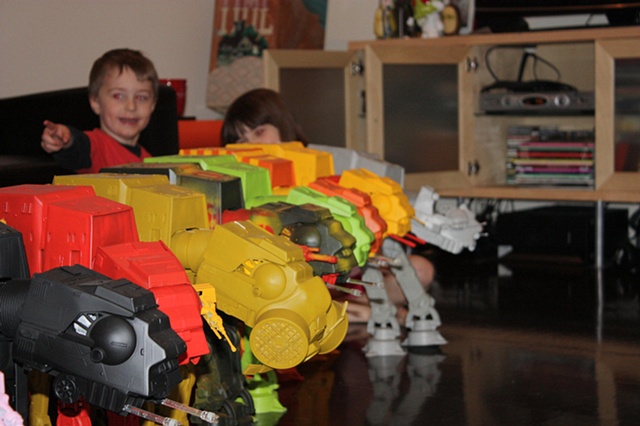
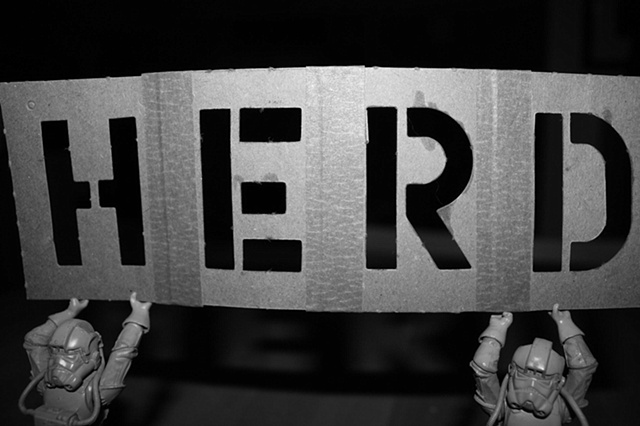
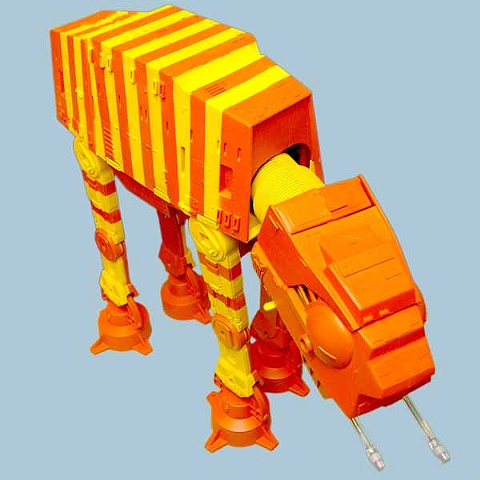
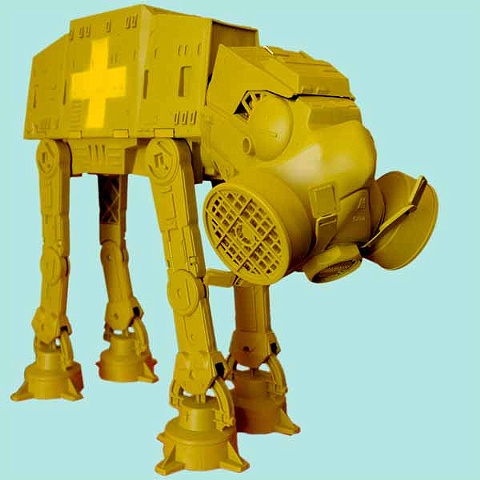
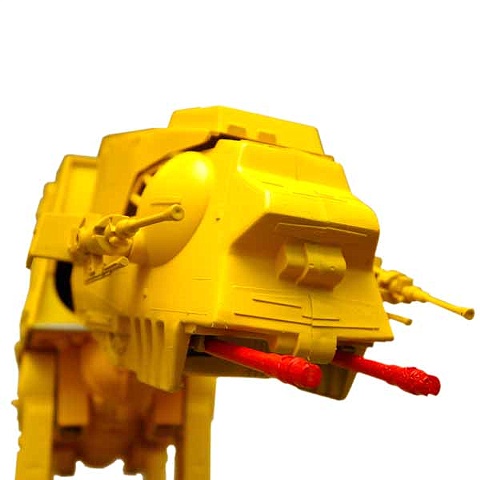
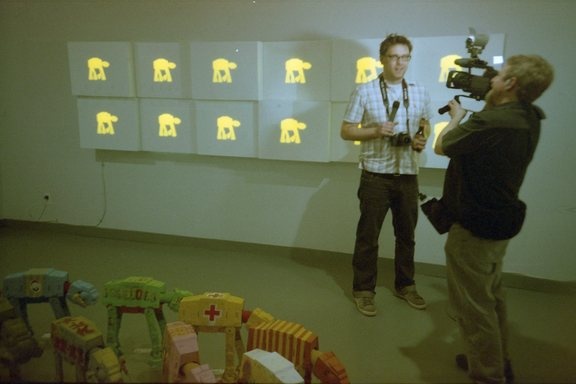
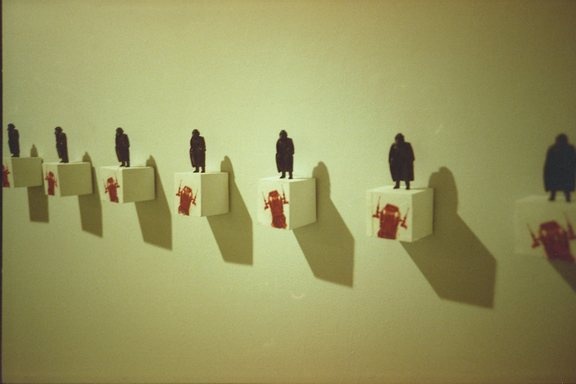
At first glance, Herd may be viewed as an installation that supports the fixation with pop culture and the mass produced. With its standardized treatments including graffiti, collage, stenciling, bold graphics, and spray painting it is an easy meal for the cool, hip, culturally savvy teen. And with its use of the iconographical Star Wars AT-ATs and their allure as home decorating items and nostalgic identifiers even Generation-X are made to feel at home in the same pasture.
Despite this, in the stark visual language of the pieces there also rests the significance of the work as more than the mere assimilation of popular vernacular but as the transmogrification of the accumulated myriad sources into a single consciousness that is reflective of the culture and critical of its origins and future.
Adriean Kolerics work exposes the compelling childhood emotive value as signified by the AT-ATs and redefines these emotions within the context of his adult life as the expression of an artist engaged in the deciphering of culture and Self. Nostalgia and the subtleties of influence appear as icons or broad strokes of color, emotion, texture, motion, and history. In the case of nostalgia, one can not erase the past. The past influences and aides in defining the present. An individual history is the history of the whole. We share in the history of the individual in whole or in part. We become ingredients of the brew, of the events that define our time. As for the influences, our consciousness is explosively replicating. The identity of the artist now includes the innumerable influences of a world whose boundaries evaporate with the spread of modern communications networks and distribution systems. The pulse of foreign styles, attitudes, traditions, and cultural assumptions harmonizes with those of the world they migrate to and inevitably influence the receiver.
Like mass advertising campaigns, popular art assimilates the lingo of its audience in order to communicate succinctly and influence poignantly. From this point of view, Herd is then a common sense accumulation or a resting place for the pop consciousness where the parts of many transmogrify into a single cohesive new creature- a new visual expression of the whole that counterpoints its influences as both internal and external forces influencing the artist. Yet unlike Pop Art and its questioning of art (its materials, meaning, symbols, spiritual content, its own existence, etc.) Herd is fully self-aware and self-accepting. It speaks, Here I am and not Where am I. Herd contradicts irony. As an expression of creative identity Herd foils arguments for ironic speculation. In the acceptance of its historical and present day influences the experience of a common lifestyle, of a prevalent psychology is unveiled.